

Integrated Waste Management & Regenerative Practices
Towards a Zero-Waste, Regenerative Future
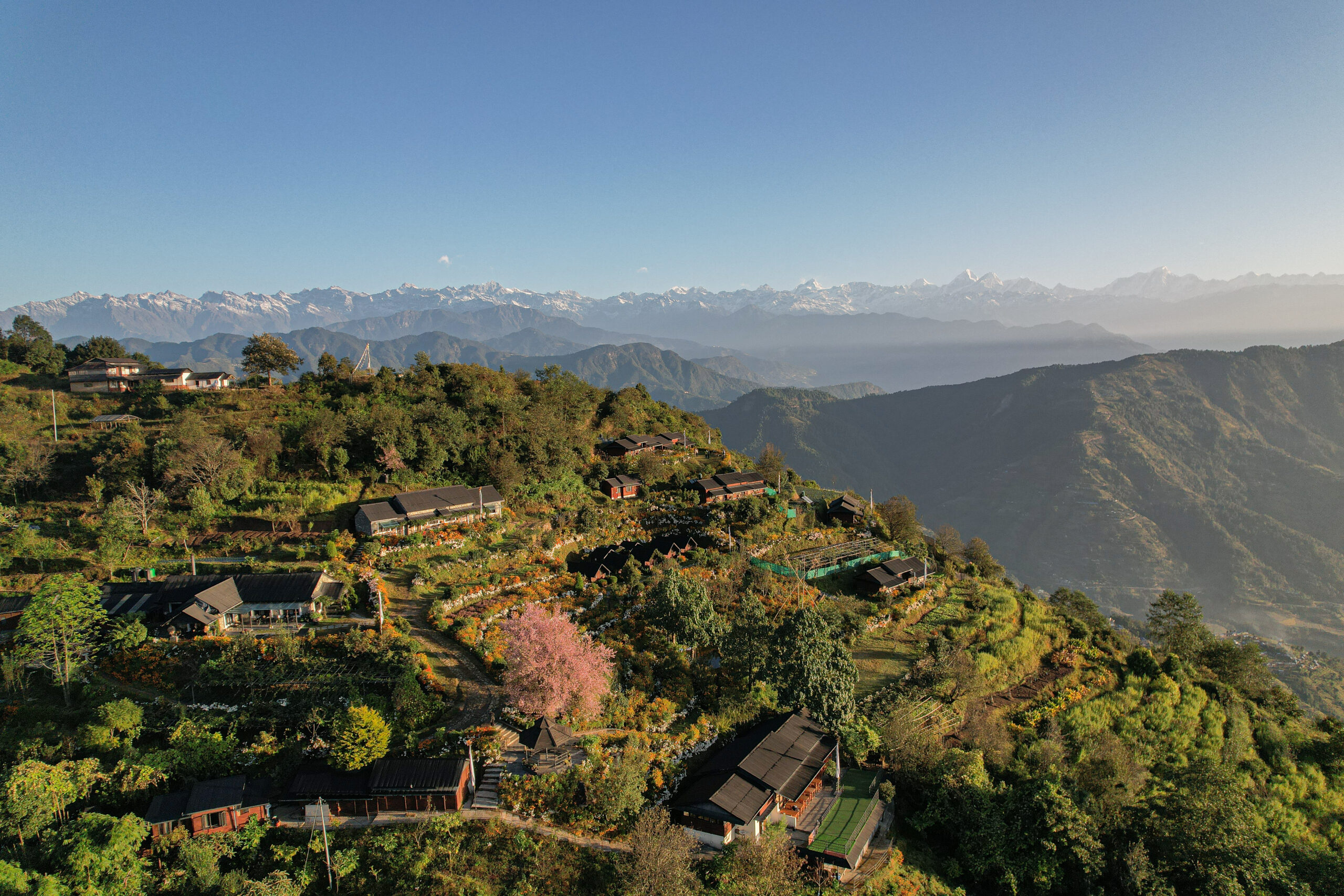
Nestled in the pristine landscapes near Shivapuri Nagarjun National Park, Prakriti Resort & Organic Farm embodies a living model of regenerative hospitality—where environmental stewardship is not an obligation, but an expression of service. Every system within the resort is thoughtfully designed to work in harmony with nature, integrating permaculture, circular economy principles, and holistic resource management to restore ecosystems, conserve biodiversity, and support community wellbeing.
At Prakriti, waste is not viewed as a problem, but as a resource in transition. Guided by a strong zero-waste philosophy, the resort minimizes environmental impact through integrated systems that combine soil regeneration, water conservation, and responsible waste and wastewater management—ensuring that natural resources are protected while public and ecological health are enhanced.
Governance, Policy & Regenerative Vision
Sustainability at Prakriti is anchored in a formal Waste Management Policy built on the principles of Reduce, Reuse, and Recycle. A dedicated Waste Management Committee oversees implementation, ensuring continuous monitoring, compliance with sustainability standards, and alignment with the resort’s broader Responsible Tourism and Zero-Waste vision.
Extending beyond the resort, the Haibung Environment and Tourism Development Committee promotes destination-level regeneration. It works to preserve local culture and aesthetics, discourage visually disruptive concrete development, and establish codes of conduct that minimize noise, light, and waste pollution—while encouraging permaculture-based, context-sensitive design across the region.
This work is strengthened through collaborative partnerships with organizations such as Environment and Public Health Organization, Khaali Sisi Management Pvt. Ltd., SAKAL Bio-Enzyme Nepal Pvt. Ltd., Bamboo Bazar Pvt. Ltd., Zero Circular Pvt. Ltd., and local authorities ensuring technical excellence, responsible recycling, and innovation in sustainable materials.
Waste Segregation & Circular Resource Flow
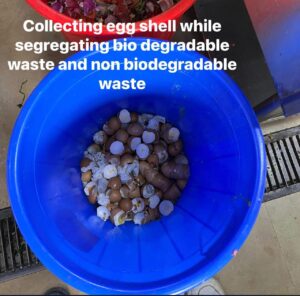
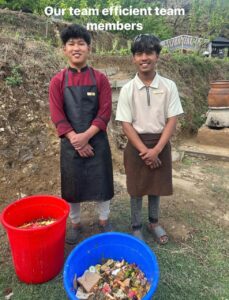
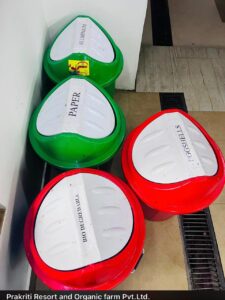
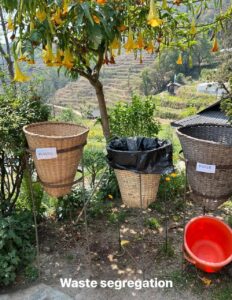
Waste segregation is practiced rigorously at source across all operational areas—kitchens, dining spaces, guest rooms, farms, and storage facilities. Materials are categorized into biodegradable, non-biodegradable, recyclable, and hazardous waste, supported by clearly labeled systems that ensure efficient downstream processing.
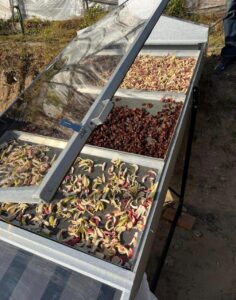
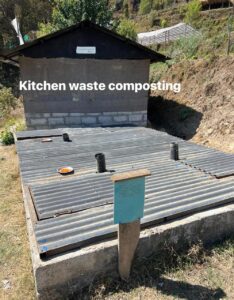
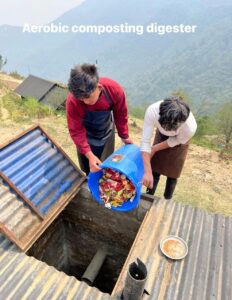
Organic waste forms the backbone of Prakriti’s circular system. Through composting and vermicomposting, biodegradable materials are returned to the soil, enriching farm productivity. Additional regenerative practices include the use of crushed eggshells for calcium, wood ash for mineral enrichment, and dry leaves for mulching. Surplus organic matter is also utilized as animal feed where appropriate.
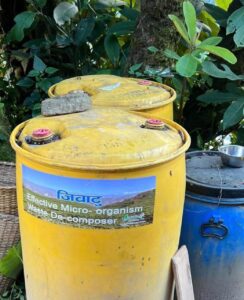
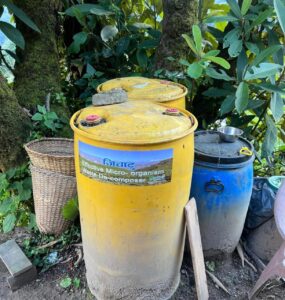
Advanced ecological techniques further enhance this cycle. Biochar is produced from waste wood to improve soil fertility and carbon sequestration, while Indigenous Microorganism (IMO) cultivation accelerates decomposition and strengthens soil health—transforming the farm into a self-sustaining, closed-loop ecosystem.
Plastic Reduction & Responsible Material Management
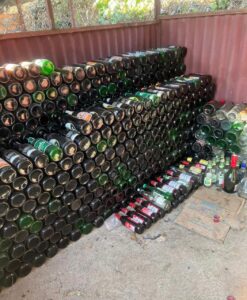
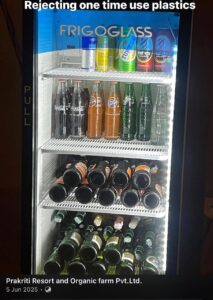
The resort maintains a strict policy against single-use plastics. Plastic bottled water has been entirely eliminated, replaced with safe, mineral-rich spring water served in reusable glass containers. Cloth bags, paper packaging, and bio-based alternatives are prioritized across operations.
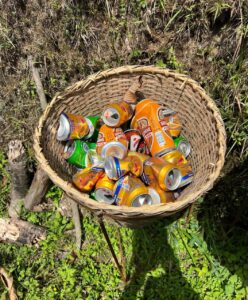
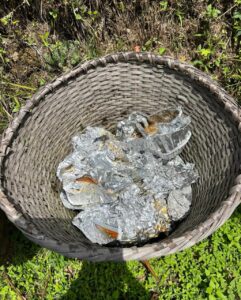
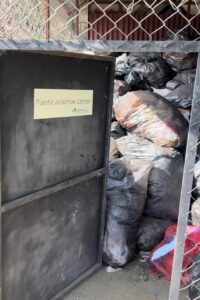
Non-biodegradable waste is carefully sorted, stored, and transferred to certified recycling partners through Khaali Sisi Management Pvt. Ltd.. Hazardous materials such as batteries and toxic waste are handled with special care, while glass and foil are safely contained to prevent environmental leakage.
Water, Wastewater & Sanitation (WASH)
Water at Prakriti is treated as a precious, shared resource. Responsibly sourced from the foothills of Shivapuri Nagarjun National Park, the spring water is monitored daily, with regular cleaning and laboratory testing ensuring safety and quality. Conservation is reinforced through water-efficient fixtures, eco-sanitation toilets, low-water urinals, and awareness initiatives encouraging mindful use among staff and guests.
To further reduce environmental pressure, laundry operations are managed in Kathmandu—minimizing water consumption, avoiding chemical discharge into sensitive ecosystems, and reducing energy demands, particularly in high-altitude conditions where natural drying can take several days.
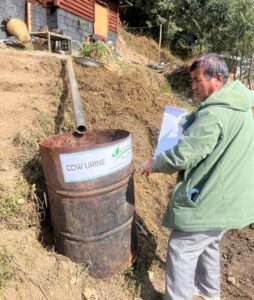
Wastewater management follows a nature-based approach. Greywater is reused for irrigation, while kitchen wastewater is treated through grease traps and constructed wetland bio-filtration systems. Within these systems, bio-enzyme solutions break down fats and organic matter, while beneficial microorganisms purify the water and support plant growth.
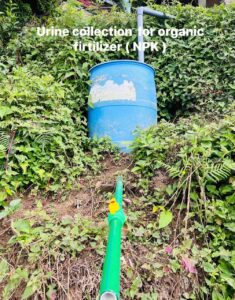
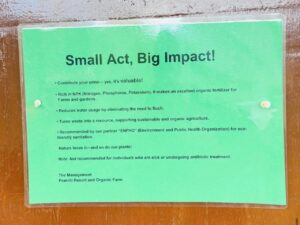
Blackwater is safely processed through eco-sanitation technologies, including the Sulabh fecal sludge management system and natural soak pits. These systems not only protect surrounding ecosystems but also enable nutrient recovery, allowing treated outputs to enrich soil fertility. Even handwashing water—containing bio-enzyme soaps—enters these biological systems, where microbial activity accelerates decomposition and supports a fully circular water cycle.
Chemical-Free Living & Safe Alternatives
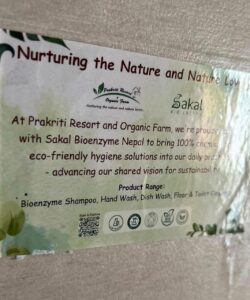
In alignment with its regenerative philosophy, Prakriti avoids synthetic chemicals entirely. No chemical fertilizers or pesticides are used in farming, and conventional cleaning agents have been replaced with natural bio-enzyme solutions from SAKAL Bio-Enzyme Nepal Pvt. Ltd.. These solutions ensure effective hygiene while preventing harmful contamination of soil and waterways.
Eco-friendly guest amenities, sourced from Bamboo Bazar Pvt. Ltd., further support a toxin-free environment.
Sustainable Kitchen, Dining & Resource Recovery
The resort’s farm-to-table philosophy significantly reduces packaging waste while ensuring freshness and nutrition. Dining practices are designed to minimize food waste, including buffet systems that use smaller plates to encourage mindful portions.
Plastic bottles and soft drinks are replaced with fresh juices and spring water, served in glass containers. Even kitchen by-products are reintegrated into the system—used cooking oil is repurposed into soap or wood treatment, while organic waste returns to compost systems or livestock feed.
Rooms, Procurement & Farm Integration
Guest rooms reflect the same ethos of sustainability, featuring bamboo toothbrushes, paper-based packaging, refillable glass water jugs, and eco-friendly personal care products.
Procurement policies prioritize bulk purch
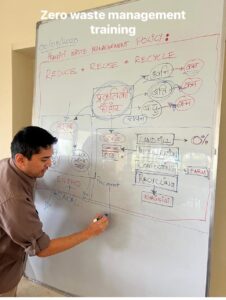
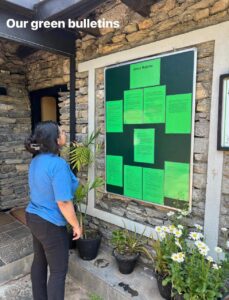
Our zero-waste stewardship goes beyond minimizing waste; it takes a holistic approach that includes energy efficiency and comprehensive management of all forms of impact—such as emissions, noise and light pollution, and the environmental footprint of built structures like concrete.